
What Makes Some 1999 Pennies Worth a Second Look
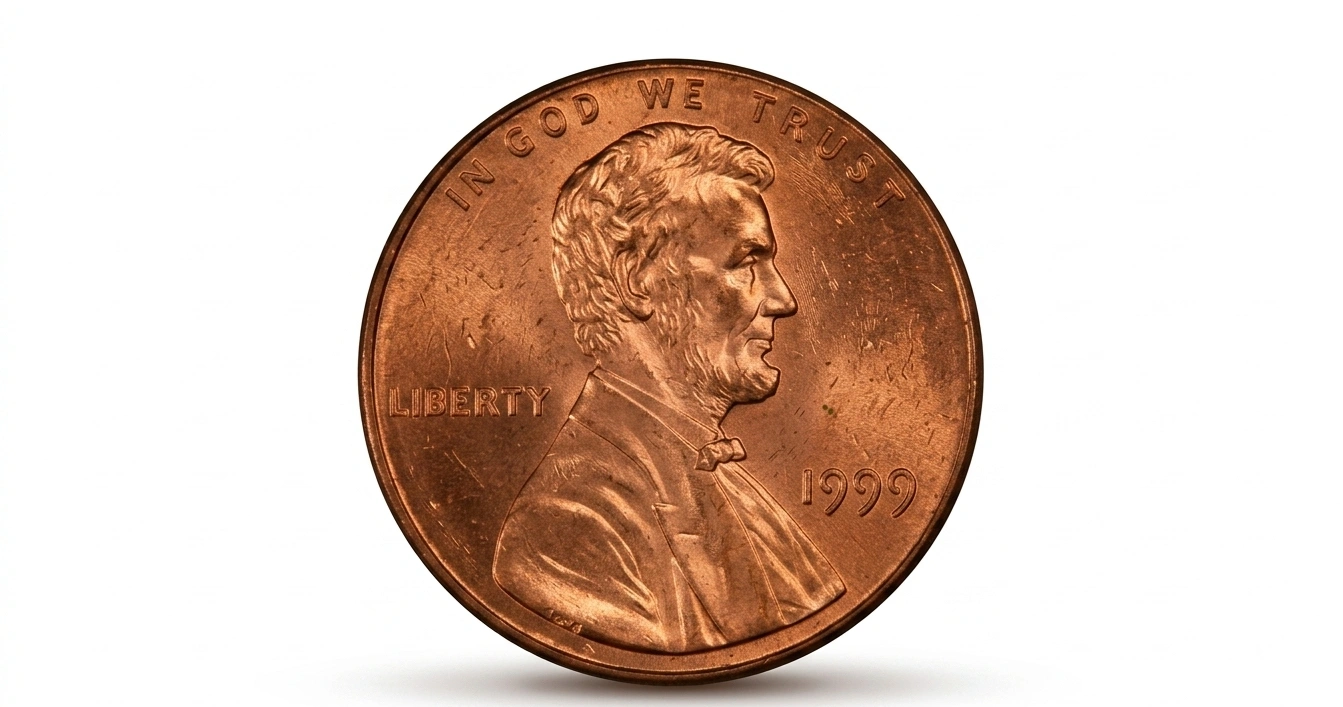
Not all imperfections are flaws — some are signals.
Differences in letter placement on the 1999 penny reverse and production cycle defects determine the final market price of a specimen.
Feature | Specification |
Weight | 2.5 grams |
Diameter | 19.05 mm |
Thickness | 1.52 mm |
Core Material | 97.5% Pure Zinc |
Outer Layer | 2.5% Pure Copper |
Wide AM Variety on the Reverse
Primary value of the 1999 issue lies in using a reverse die intended for memorial coins.
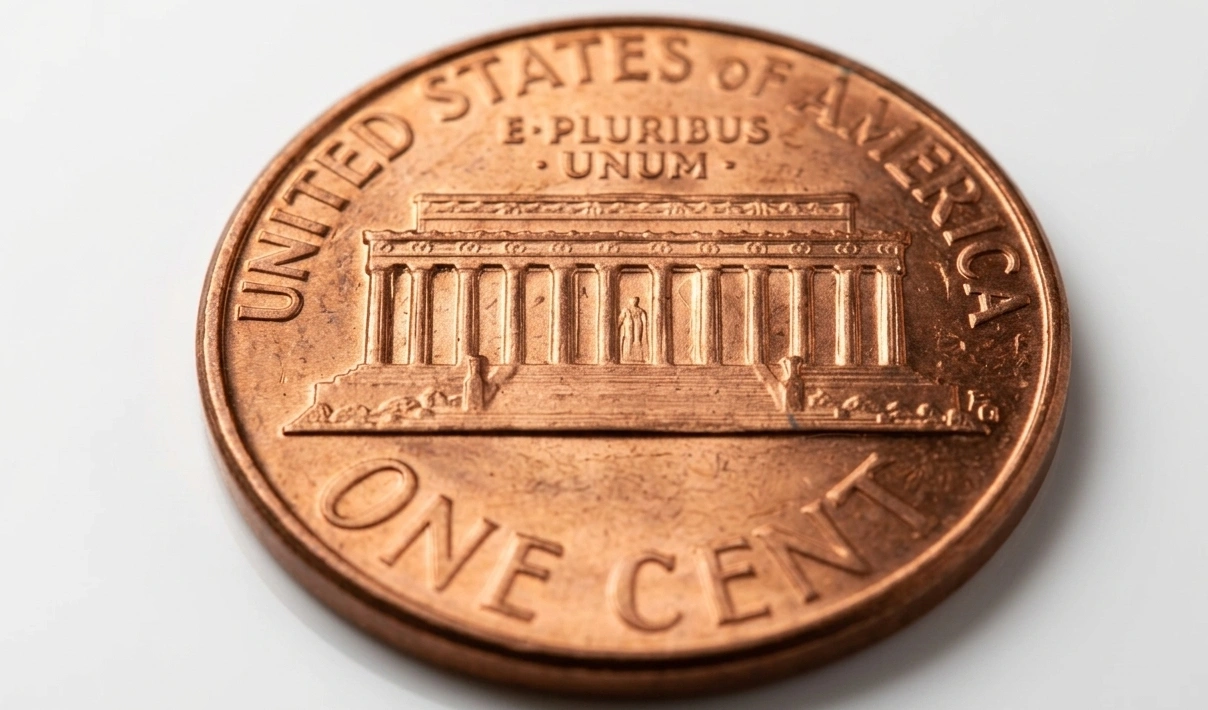
Usually, letters A and M in the word AMERICA on standard cents almost touch each other.
The Wide AM variety features a noticeable gap between these letters.
Dies for proof quality were mistakenly applied during the minting of ordinary circulating coins.
Identifying Wide AM
Visible space between A and M
Designer's initials FG located closer to the Lincoln Memorial
Clear font separation
Market Dynamics for Wide AM
The coin value depends on preservation and professional certification.
Coins in MS-65 grade show an annual price increase of 8–12%.
2024 year price: $450.00 per sample.
2025 year price: $510.00 per sample.
2026 year price: $585.00 per sample.
Record price for an MS-67 specimen in ideal condition exceeded $2,300.00.
Minting Errors and Production Defects
1999 minting defects are classified by the type of technical failure.
Each error category has its own value scale.
Double Die Obverse
This type of flaw arises from inaccurate alignment of the die and the hub.
Doubling of the date or the word LIBERTY is observed on the front side.
Although rare for 1999, discovered samples carry a high price.
Off-Centre Strike
Blank displacement causes part of the design to fall outside the circle.
Worth increases significantly when the minting date remains visible on the blank.
10% Displacement → $25.00 worth.
50% Displacement → $150.00 worth.
80% Displacement → $350.00 worth.
Die Clash
Hitting dies together without a blank in between leaves mirrored impressions.
Elements of the Memorial columns might be visible on the front side.
Surface Condition and Grading
Metal preservation directly affects the investment potential of the asset.
Presence of fingerprints or oxidation marks reduces the price by 40–60%.
The Sheldon scale determines the numerical condition indicator from 1 to 70.
Preservation Categories
MS-60: presence of micro-scratches
MS-63: moderate luster
MS-65: high original mint luster
MS-67: exceptional field clarity
Impact of Color on Price
Copper coins are classified by surface hue.
Red (RD) → Full preservation of original color.
Red-Brown (RB) → Partial surface darkening.
Brown (BN) → Full oxidation of the copper coating.
RD-marked specimens are valued 30% higher than RB ones.
Auction Sales Statistics
Analyzing major trading platforms allows tracking price trends.
Investing in rare 1999 varieties is considered stable.
Coin Type | Grade | Record Price | Sale Year |
Wide AM | MS-67 RD | $2,350.00 | 2023 |
Double Die | MS-65 RD | $850.00 | 2024 |
Off-Centre 60% | MS-64 RD | $420.00 | 2025 |
Multi-Strike | MS-63 RB | $1,100.00 | 2026 |
Coating Degradation Processes
Zinc inside the coin is highly prone to rot when the copper layer is damaged.
Bubbles appearing on the surface indicate an internal reaction.
Zinc reacting with oxygen → Structure destruction → Loss of value.
Using protective capsules prevents moisture from reaching the metal.
Rarity Factors: Philadelphia vs Denver
Mints mark their products with letter designations.
Absence of a mint mark indicates production in Philadelphia.
The D mark corresponds to Denver production.
Wide AM variety is predominantly found on coins without a mint mark.
Denver 1999 cents rarely demonstrate this type of error.
Philadelphia Mintage: 5,237,600,000 pieces.
Denver Mintage: 6,360,060,000 pieces.
Authenticity Verification Procedure
Detecting fakes requires using a coin identifier app.
Employing scales with precision to thousandths of a gram helps exclude counterfeits.
Checking sample weight.
Measuring diameter with a caliper.
Studying letters A and M.
Inspecting the coin edge.
Value Dynamics Over Time
Prices in the numismatic market fluctuate based on the number of specimens found.
Discovering a new hoard of Wide AM coins might temporarily lower the price.
Percentage change in Wide AM prices (MS-65): 2023–2024: +13.3% price. 2024–2025: +11.7% price. 2025–2026: +14.7% price.
Grease Strike Errors
Thick grease getting into die details makes the design blurry.
Sometimes the digit 9 in the 1999 date looks faint or invisible.
Such coins generate interest only when significant design elements disappear completely.
Letter disappearance → Technical flaw → Growth in worth.
Storage and Long-Term Preservation
Proper archive organization excludes mechanical damage to coins.
Acid-free cardboard albums are the standard for storing Lincoln cents.
Contact with harmful plastics causes irreversible green spots.
Acid-free environment → Patina stability → MS rating preservation.
Comparing 1999 with Other Wide AM Issues
The Wide AM variety also occurs in 1998 and 2000.
1999 is considered the rarest among the three issues.
The number of found 1999 Wide AM coins is dozens of times smaller than 1998 counterparts.
Issue Year | Relative Rarity | Base Price (MS-65) |
1998 | Low | $25.00 |
1999 | High | $585.00 |
2000 | Medium | $50.00 |
Coating Technology and Plating Issues
Copper coating is applied to the zinc core using electricity.
Technology violations lead to copper peeling or crack formation.
Coins with coating deficiency weigh less than the standard 2.5 grams.
Copper absence → Grey color → Sample uniqueness.
Proof Minting Features for Collectors
Proof quality coins were issued specifically for sets.
They feature mirrored fields and frosted relief.
Close placement of letters A and M (Close AM) is typical for 1999 proof coins.
Finding a Wide AM on a proof coin remains a theoretically possible but unrecorded event.
Financial Analysis of 1999 Penny Investments
Buying certified coins in MS-66 grade and higher is viewed as a low-risk asset.
Liquidity of such coins on the American market remains extremely high.
Investment horizon should be at least 5 years to cover auction fees.
Asset growth over 5 years: +65% value.
Average annual return: +13% value.
Lighting Impact During Inspection
Using tilted light is recommended for finding Wide AM.
This allows seeing letter boundaries and the gap more clearly.
Cold spectrum LED lamps facilitate finding field defects.
Light → Shadow → Gap visualization.
Double Die Classification by Strength
Numismatists divide doubling into several classes depending on the failure cause.
Class 1 (Rotated): hub rotation relative to the die.
Class 2 (Design Hub): using different design hubs.
Class 5 (Pivoted): hub tilting during impact.
Small doubling of date digits is most likely for 1999.